
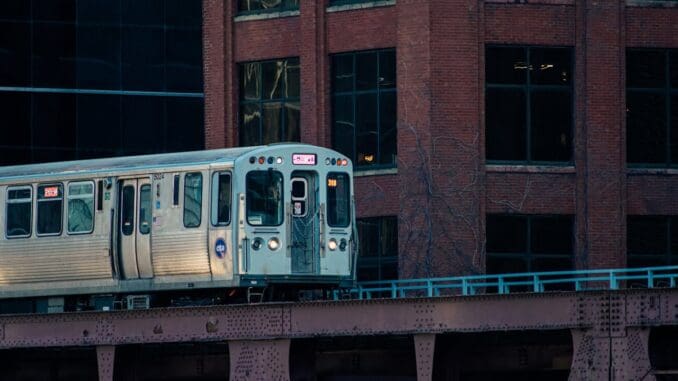
If you’re a Logan Square resident who commutes to the Loop, you know the drill. You’re squeezing onto the packed Blue Line at Logan Square station during rush hour, hoping you’ll actually get a seat. You’re watching the minutes tick by as the train sits inexplicably stopped between California and Division. You’re mentally calculating whether you should’ve just biked down Milwaukee Avenue instead.
And by the time you get to your desk? You’re already exhausted.
The daily grind of commuting—especially on the CTA during Chicago winters or summer delays—can turn what should be transition time into a stress amplifier. Add in work burnout from demanding jobs, and you’ve got a recipe for chronic anxiety that follows you from the 606 Trail all the way to your downtown office.
But here’s what most Logan Square commuters don’t realize: your commute doesn’t have to drain you. With the right stress management techniques, you can actually transform that Blue Line ride or drive down the Kennedy into something that helps rather than hurts.
Why Commuter Stress Hits Different in Logan Square
Logan Square has become one of Chicago’s most desirable neighborhoods—and with good reason. Between the Logan Square Farmers Market, the buzzing restaurant scene on Milwaukee Avenue, and the beautiful boulevards lined with historic graystones, it’s an incredible place to call home.
But that vibrancy comes with a trade-off: many Logan Square residents work in the Loop, Streeterville, or other downtown neighborhoods, meaning they face some of the longest commutes in the city.
Whether you’re:
- Taking the Blue Line from Logan Square to Clark/Lake (about 25 minutes on a good day, 45 on a bad one)
- Driving down the Kennedy during rush hour (a special kind of torture)
- Biking when weather permits but dreading the winter months
- Transferring between multiple CTA lines to reach your office
…the stress adds up. Day after day, year after year.
And when you’re already dealing with work burnout—maybe you’re in a high-pressure job in finance, tech, or healthcare—that commute becomes the bookends to an already overwhelming day. You leave home stressed about work. You come home stressed about work. The commute just amplifies everything.
This is where stress management therapy can make a real difference. Because the goal isn’t just to “cope” with your commute—it’s to fundamentally change your relationship with those in-between moments.
Technique 1: The Logan Square Station Breathing Reset
Let’s start simple. Before you even board the train at Logan Square station, try this:
Stand on the platform (ideally not right at the edge where you’re getting jostled). Take three slow breaths—in through your nose for four counts, hold for four, out through your mouth for six.
That’s it.
This brief mindfulness practice does something important: it creates a boundary between “home you” and “work you.” Instead of carrying your morning stress directly onto the train, you’re hitting pause.
You can do the same thing when you arrive at your Loop station—whether that’s Clark/Lake, Washington, or Monroe. Before you rush up the stairs into the chaos of downtown, take those three breaths again.
Why this works: Controlled breathing activates your parasympathetic nervous system—essentially telling your body “we’re not in danger.” When you’re anxious about work or frustrated about the commute, your body goes into fight-or-flight mode. This breathing pattern is the antidote.
Mindfulness therapy teaches this as “creating a pause.” You’re not trying to eliminate stress—you’re creating space around it so it doesn’t consume you.
Technique 2: The Blue Line Commute Reframe
Here’s a hard truth: if you’re taking the Blue Line from Logan Square to the Loop, you’re probably going to deal with delays, crowds, and the occasional person eating a full hot meal next to you. (We’ve all been there.)
You can spend that time:
- Doom-scrolling on your phone
- Stewing about your workload
- Getting progressively more tense about being late
Or you can reframe it.
Try this: think of your commute as buffer time. Not wasted time—buffer time. This is time that’s already lost to transit, so you might as well use it intentionally.
Some ideas:
- Listen to something that genuinely interests you (not just the news making you more anxious)—whether that’s a podcast about Chicago history, a comedy special, or an audiobook
- Use a meditation app for a 10-minute guided session (even with train noise in the background)
- Do a mental gratitude list specifically about Logan Square—the coffee shop you love on Kedzie, the neighbor who always says hi, the way Palmer Square looks in fall
This isn’t toxic positivity. You’re not pretending the commute is great. You’re just refusing to let it steal 50 minutes of your life twice a day.
Why this works: Cognitive reframing is a core stress management technique. When you change how you think about a situation, you change how your body responds to it. Your cortisol levels actually decrease when you shift from “this commute is ruining my life” to “this is my time to decompress before work.”
Technique 3: The Physical Release Before You Even Leave
If you’re dealing with work burnout, you’re probably holding tension in your body—tight shoulders, clenched jaw, that knot between your shoulder blades that never quite goes away.
Here’s a technique you can do right in your Logan Square apartment or house before you leave:
The 5-Minute Physical Shake-Out:
- Stand in your living room and literally shake out your arms and legs like you’re trying to fling water off them
- Roll your shoulders backward ten times, then forward ten times
- Do five big neck rolls in each direction
- Stretch your arms overhead and take three deep breaths
- Finish with five gentle forward folds—just letting your upper body hang
Sounds ridiculous? Maybe. But it works.
Why this works: Anxiety and stress aren’t just mental—they’re physical. When you’re burned out at work, your body is in a constant state of tension. This brief physical release gives your nervous system permission to let go before you even start your commute.
Athletes do this before competing. You can do it before facing the Blue Line.
Technique 4: The Kennedy Expressway Mindfulness Practice
If you’re driving to the Loop via the Kennedy—especially during rush hour—you know it can feel like a slow march toward insanity. Brake lights stretching from the Logan Square exit all the way past Fullerton. Construction that seems to never end. That one driver weaving between lanes like they’re in a video game.
Instead of white-knuckling your steering wheel and cursing every other car, try this mindfulness approach:
Notice without judgment.
When you feel frustration rising (which you will), don’t fight it. Just notice: “I’m feeling frustrated right now.” That’s it. You’re not trying to eliminate the frustration—you’re just observing it like you’d observe clouds moving across the sky.
Then redirect your attention to something neutral:
- The sensation of your hands on the steering wheel
- The sound of your tires on the road
- The buildings of Logan Square fading in your rearview mirror
This is advanced mindfulness therapy technique—creating distance between yourself and your emotions so they don’t hijack your whole experience.
Why this works: When you’re stuck in traffic, you can’t control the cars around you. But you can control where you put your attention. And where attention goes, stress follows—or diminishes.
Technique 5: The Post-Commute Transition Ritual
Whether you’re coming home to Logan Square from Streeterville or heading into work, the transition matters just as much as the commute itself.
Many people dealing with work burnout make the same mistake: they get off the Blue Line at Logan Square station and immediately start thinking about everything they still need to do—emails they didn’t answer, projects that are behind, colleagues they’re frustrated with.
Before you know it, you’ve walked all the way down Kedzie or Sawyer or Whipple and you don’t even remember the journey.
Try this instead:
Create a 5-minute transition ritual when you get off the train:
- Walk through Palmer Square and actually look at the trees
- Stop at your favorite coffee spot on Milwaukee Avenue
- Sit on a bench near the Logan Square Monument for five minutes
- Walk the extra block just to pass that house you love on the Boulevard
This isn’t about adding time to your commute—it’s about creating a boundary between work stress and home life.
Why this works: Transition rituals are a key part of stress management therapy because they prevent work anxiety from colonizing your entire life. Without these boundaries, work burnout doesn’t stay at work—it follows you home, ruins your evenings, and keeps you up at night.
When Commuter Stress Becomes Something More
Here’s the thing most articles about stress management won’t tell you:
Sometimes, commuter stress isn’t really about the commute.
If you find yourself:
- Dreading your commute so intensely that it affects your sleep the night before
- Having panic attacks on the Blue Line
- Feeling such severe work burnout that even thinking about your commute makes you want to cry
- Using your commute as an excuse to avoid other parts of your life
…then you might be dealing with anxiety or burnout that needs more than breathing exercises.
And that’s okay. That’s actually really common, especially in high-achieving neighborhoods like Logan Square where so many people are pushing themselves incredibly hard at demanding downtown jobs.
Stress management therapy can help you develop personalized techniques that go beyond surface-level coping. Instead of just “surviving” your commute, you can actually address the underlying anxiety and burnout that make the commute feel unbearable in the first place.
Your Commute Doesn’t Have to Be the Worst Part of Your Day
Living in Logan Square and working in the Loop means you’re part of the rhythm of Chicago—the daily flow of people moving through this city, contributing to its energy, making it work.
But you don’t have to sacrifice your mental health to do it.
Whether you’re on the Blue Line, in your car on the Kennedy, or biking down Milwaukee Avenue, these stress management techniques can transform your commute from something that drains you into something neutral—or maybe even something restorative.
Start with just one technique. Try the breathing reset at Logan Square station tomorrow morning. See how it feels.
Because you deserve to arrive at work calm. And you deserve to come home to Logan Square ready to actually enjoy this neighborhood you’ve chosen to call home.
Reach out today to schedule an initial consultation to learn how specialized stress management therapy can help you find lasting relief.